Kalawa (Moli Thread): Meaning and How to Tie It
What is moli thread in English, which hand to tie kalawa on, the tying mantra and when to change it. A simple guide to kalawa for pooja, the traditional way.
Few things are as familiar in Indian homes as the red and yellow thread tied on the wrist during pooja. It is called kalawa, moli or mauli, and it appears at almost every ritual – from a simple Satyanarayan katha to weddings, griha pravesh, hawan and festivals. Yet many people are not sure what it is called in English, which hand it should be tied on, or how long it should be worn.
This guide answers all of these questions and explains how to use kalawa for pooja in the traditional way.
What Is Kalawa or Moli Thread?
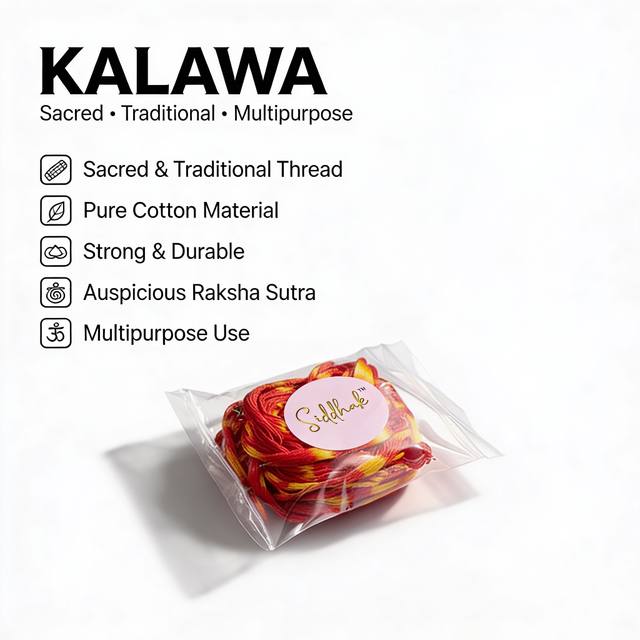
Kalawa is a cotton thread, usually red with yellow, and sometimes with touches of other colours, made by twisting several fine strands together. It is considered a raksha sutra, a thread of protection and blessing. The word mauli is often explained as "that which is on top" and is linked with Lord Shiva, who is called Chandramauli, the one who wears the moon on his head.
The colours themselves carry meaning. Red is associated with shakti, auspiciousness and Hanuman ji, while yellow is associated with Lord Vishnu, Guru (Brihaspati) and sacredness.
Moli Thread in English
There is no single English word for moli, but it is commonly described as a sacred red thread, holy thread or protection thread. You may also see it called a Hindu wrist thread or raksha sutra. In some regions it is simply called a pooja thread.
Where Is Kalawa Used in Pooja?
Kalawa is one of the essential items in any pooja thali. It is used:
- On the wrist of the person performing the pooja and of family members, at the time of sankalp
- Around the neck of the kalash during kalash sthapana, Navratri and griha pravesh
- On the coconut placed over the kalash, and on the purnahuti coconut in hawan
- As a vastra (cloth) offered to the deity when clothes are not available, in many pooja vidhis
- On sacred trees such as peepal and banyan during certain vrats and parikramas
- On new things such as a new vehicle, account books (bahi khata) on Diwali, or the main door during festivals
Because it is needed so often, many families prefer to keep a longer roll at home rather than small bundles. Our kalawa (mauli) thread, 10 metre roll is handy for wrists, kalash, coconut and festival decorations alike.
Kalawa and Raksha Bandhan
The idea of the raksha sutra is also at the heart of Raksha Bandhan. Before decorative rakhis became popular, sisters in many families simply tied a length of kalawa on their brothers' wrists with prayers for their well-being. Even today, many families tie a simple kalawa as rakhi, or tie one along with the rakhi, to keep that traditional touch.
Kalawa Kis Haath Me Bandhe? (Which Hand?)
This is one of the most common questions. The widely followed tradition is:
| Who | Hand |
|---|---|
| Men and boys | Right hand |
| Unmarried girls | Right hand |
| Married women | Left hand |
Traditions vary slightly from region to region, and some families tie kalawa on the right hand for everyone. If your family or priest follows a particular custom, follow that.
How to Tie Kalawa: Step by Step
- Prepare: Kalawa is usually tied during pooja, at the time of sankalp, by the priest or an elder of the family.
- Hold your hand correctly: The person receiving the kalawa keeps the fist of that hand gently closed. Many families place a coin or a few grains of akshat (rice) in the fist. The other hand is placed on the head.
- Wrap the thread: The kalawa is wound around the wrist, commonly three times. Some traditions wrap it five or seven times. Three turns are often linked with the Trimurti or the three goddesses – Lakshmi, Saraswati and Durga.
- Chant the mantra: While tying, the priest or elder recites the raksha sutra mantra given below.
- Offer the coin or rice: After the kalawa is tied, the coin or akshat in the fist is offered to the deity or given as dakshina.
Kalawa Tying Mantra
The mantra most commonly recited while tying kalawa or a raksha sutra is:
येन बद्धो बली राजा दानवेन्द्रो महाबलः। तेन त्वामनुबध्नामि रक्षे मा चल मा चल॥
Its meaning: "With the thread by which the mighty King Bali, lord of the danavas, was bound, I bind you. O protector, do not waver, do not waver." This mantra recalls the story of King Bali and the protection of the raksha sutra. Small variations in wording are found in different traditions.
How Long Should Kalawa Be Worn?
There is no single fixed rule. Kalawa is usually worn until it starts to fade, loosen or look worn. Many families follow these customs:
- A new kalawa is tied at every major pooja, hawan or festival.
- Many people prefer to change it on a Tuesday or Saturday.
- Before tying a new one, the old kalawa is removed respectfully.
- Avoid wearing a kalawa that has become very dirty or frayed.
What to Do With Old Kalawa
An old kalawa should not be thrown in the dustbin. Traditionally, it is placed at the base of a peepal tree, tied to a sacred tree, or immersed in flowing water. You can also bury it in the soil of a plant pot.
The Significance of Kalawa
The meaning of kalawa is best understood through faith and tradition. The following are beliefs passed down through generations, not guaranteed outcomes:
- Protection: As a raksha sutra, kalawa is traditionally believed to bring divine protection to the wearer.
- Blessings: It is tied with mantras in the presence of the deity, so it is regarded as carrying the blessing of the pooja.
- A reminder of sankalp: The thread on the wrist reminds the wearer of the vow or intention taken during the ritual.
- Bond of love: When tied by an elder, a sister or a priest, it also becomes a symbol of affection and good wishes.
You may come across claims that kalawa on the wrist has specific health effects. These are not established, so please treat kalawa as a spiritual tradition and consult a doctor for any health matter.
Tips for Choosing Good Kalawa
- Choose a cotton thread, which is traditional and comfortable on the skin.
- Look for bright, even colours and well-twisted strands that do not break easily.
- Prefer a longer roll if you perform pooja often or need kalawa for kalash, coconuts and many family members.
- Store it in your pooja box, away from moisture, so it stays clean.
Frequently Asked Questions
What is moli thread called in English?
Moli or kalawa is commonly called a sacred red thread, holy thread or protection thread in English. It is also known as a raksha sutra.
In which hand should kalawa be tied?
Traditionally, men and unmarried girls tie kalawa on the right hand, while married women tie it on the left hand. Follow your family custom if it differs.
How many times should kalawa be wrapped?
Kalawa is commonly wrapped three times around the wrist. Some traditions wrap it five or seven times.
When should I remove my kalawa?
Remove it when it becomes faded, frayed or dirty, or before tying a new one at the next pooja. Many people prefer to change it on a Tuesday or Saturday.
Can I tie kalawa myself?
It is traditionally tied by a priest or elder during pooja, but if no one is available, you may tie it yourself with devotion while reciting the mantra or remembering your ishta devta.
Keep your pooja thali complete for every occasion. Order a 10 metre roll of traditional kalawa from Siddhak and have enough for every family member, kalash and festival.