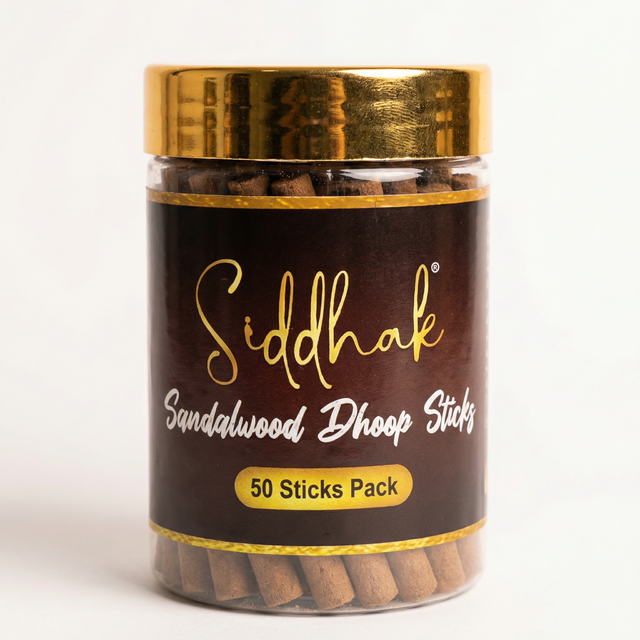
Dhoop vs Incense Sticks: Which Is Better for Pooja?
Dhoop vs incense sticks: learn how bamboo-less dhoop differs from agarbatti, and which dhoop fragrance suits Shiv, Vishnu, Lakshmi and Krishna pooja at home.
Lighting a fragrant stick before the deity is one of the most familiar moments of daily pooja. For many of us, the words dhoop and agarbatti are used interchangeably. Yet they are actually two different things, made in different ways and chosen for different reasons. If you have ever wondered about dhoop vs incense sticks, or which one is more suitable for your mandir, this guide will help you decide.
We will look at how dhoop and agarbatti are made, why many families prefer bamboo-less dhoop for worship, and which fragrance is traditionally offered to which deity, so you can choose the right dhoop sticks for pooja with confidence.
What Is Agarbatti?
Agarbatti is the familiar thin incense stick. It is usually made by rolling a paste of aromatic material and a binding powder around a thin bamboo stick, and then dipping or treating it with fragrance. When lit, the coated part burns slowly and the bamboo core remains at the end. Agarbattis are easy to find in a wide variety of scents and are convenient for quick everyday use.
Because the base and fragrance can vary greatly from one product to another, it is worth reading the label. Some sticks rely heavily on synthetic perfumes, while others use more natural ingredients.
What Is Dhoop?
Dhoop is the older form of fragrant offering mentioned in pooja vidhis as one of the sixteen upacharas (offerings) of shodashopachar pooja, where dhoop is offered right before deep (lamp). Dhoop sticks are solid and thicker, made entirely of a fragrant paste that is shaped and dried, without any stick at the centre. That is why they are often called bamboo-less dhoop. Traditional dhoop is made from ingredients such as cow dung, herbs, resins like guggal and loban, sandalwood, flowers, ghee and natural binders. Dhoop is also available as cones, cups and loose powder for burning on charcoal or cow dung cakes.
Because dhoop is denser, it usually releases a richer, thicker fragrance in a shorter time, which is why it feels especially suited to aarti and sandhya pooja.
Dhoop vs Agarbatti: Key Differences
| Feature | Dhoop Stick | Agarbatti |
|---|---|---|
| Structure | Solid stick or cone, no bamboo core | Paste coated on a thin bamboo stick |
| Typical base | Cow dung, herbs, resins, wood powders | Varies; often wood powder and binders on bamboo |
| Fragrance | Rich, earthy, fills the room quickly | Lighter, spreads gradually |
| Residue | Only ash remains | Ash plus a leftover bamboo stub |
| How to burn | Light the tip, let it smoulder on a stand or plate | Light the tip, insert in a holder |
| Traditional use | Dhoop upachar, aarti, sandhya pooja, hawan days | Everyday fragrance in homes and shops |
Why Many Families Prefer Bamboo-less Dhoop
In many Hindu households there is a long-held belief that bamboo should not be burnt during auspicious rituals. Bamboo is associated with family lineage (vansh) and is traditionally used in last rites, so burning it in a pooja is avoided by many families. Dhoop sticks, having no bamboo core, sit comfortably within this tradition. This is not a rule followed everywhere, but it is one of the main reasons devotees choose dhoop for their mandir.
Other reasons people often give:
- Natural ingredients: Dhoop made from cow dung, herbs and resins feels closer to the traditional samagri used in hawan.
- Charcoal-free options: Some incense products use charcoal as a burning base. If you prefer to avoid it, look for dhoop made on a cow dung or herbal base and check the ingredient list.
- Clean finish: With no stick left behind, there is only ash to clear away, which can be added to plant pots.
- Stronger presence during aarti: A single dhoop stick can scent a small pooja room quickly.
Which Dhoop Fragrance for Which Deity?
Our traditions associate certain fragrances with certain deities, based on the flowers, woods and resins mentioned in their stories and pooja vidhis. Any pure fragrance offered with devotion is acceptable, but these traditional pairings can make your pooja feel more personal.
| Deity | Traditionally Preferred Fragrance | Why |
|---|---|---|
| Lord Shiva | Guggal | Guggal dhoop is a classic offering in Shiv pooja, especially on Mondays, Pradosh and in Shravan |
| Lord Vishnu | Kesar (saffron) and chandan (sandalwood) | Sandalwood and saffron are central to Vishnu and Narayan worship, including tilak |
| Goddess Lakshmi | Rose and lotus | The lotus is Lakshmi's seat and rose is a favourite offering on Fridays and Diwali |
| Lord Krishna | Mogra (jasmine) | Fragrant white flowers like mogra are lovingly offered in Krishna seva and on Janmashtami |
Guggal Dhoop for Shiv Pooja
Guggal has a deep, resinous, slightly smoky aroma that feels perfectly suited to the meditative mood of Shiv worship. Our guggul dhoop sticks for Shiv pooja are made on a cow dung base, keeping them close to the traditional way dhoop has always been prepared.
Sandalwood Dhoop for Vishnu Pooja
Chandan is cooling and serene. It is used for tilak and in the worship of Lord Vishnu, his avatars and Satyanarayan katha. Our sandalwood dhoop sticks for Vishnu pooja bring that calm fragrance to your daily aarti.
Rose, Lotus and Mogra
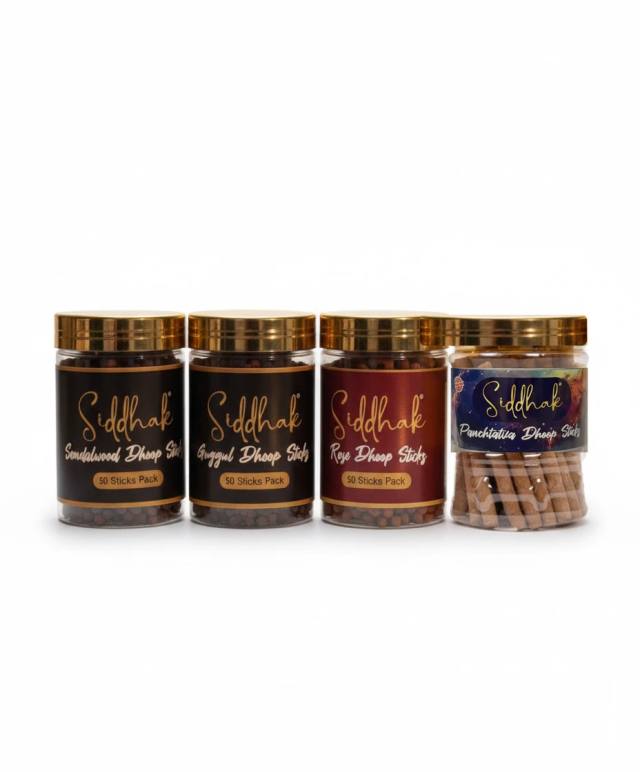
For Lakshmi pooja on Fridays, Diwali and Sharad Purnima, many devotees choose rose or lotus dhoop. For Krishna seva, especially in the evening and on Janmashtami, mogra is a much-loved choice. If you like to rotate fragrances through the week, a dhoop sticks combo for daily pooja is a convenient way to keep several options in your mandir.
How to Use Dhoop Sticks Safely
- Place a heat-safe dhoop stand, a small brass plate or a clay dish with a little sand or ash in front of the deity.
- Light the tip of the dhoop stick with a diya or matchstick and let it catch for a few seconds.
- Gently wave out the flame so that the stick smoulders and releases fragrance.
- Offer it to the deity with a short prayer, moving it in a gentle circle as part of aarti if your tradition does so.
- Rest it on the stand and let it burn out completely.
- Keep the room ventilated, especially if anyone is sensitive to smoke. People with asthma or breathing concerns may want to speak to their doctor.
- Keep burning dhoop away from curtains, paper and children's reach.
- Store dhoop sticks in a dry, closed box so that they do not absorb moisture.
So, Dhoop or Agarbatti?
Both have a place in Indian homes. Agarbatti is convenient for a light, long-lasting background fragrance. Dhoop, on the other hand, is the traditional choice for the dhoop upachar in pooja and aarti, has no bamboo core, and is often made from more traditional ingredients like cow dung and herbs. If you want your daily pooja to feel closer to the way it has been performed for generations, bamboo-less dhoop is a lovely choice.
Frequently Asked Questions
What is the difference between dhoop and agarbatti?
Agarbatti is a paste coated on a thin bamboo stick, while dhoop is a solid stick or cone made entirely of fragrant material with no bamboo core. Dhoop usually has a richer fragrance and leaves only ash behind.
Why is bamboo avoided in pooja?
Many families traditionally believe that bamboo, which is linked with vansh (lineage) and used in last rites, should not be burnt in auspicious rituals. Practices vary, so follow your own family tradition.
Which dhoop is best for Shiv pooja?
Guggal dhoop is the traditional favourite for Lord Shiva and is commonly offered on Mondays, Pradosh, Mahashivratri and throughout Shravan.
Which dhoop should I use for Lakshmi pooja?
Rose and lotus fragrances are traditionally associated with Goddess Lakshmi and are popular for Friday pooja and Diwali.
How many dhoop sticks should I light during pooja?
One stick is usually enough for a home mandir. Some families light two or more during festivals or larger aartis. There is no strict rule; devotion matters more than number.
Make your daily aarti more fragrant and traditional. Explore bamboo-less dhoop sticks for Shiv, Vishnu and everyday pooja on Siddhak and bring a calm, devotional atmosphere into your home.
/Front.jpeg?width=640&quality=72&resize=contain)